Ask a question
You can ask questions or search for stories, guides, or tools that help you.

You can ask questions or search for stories, guides, or tools that help you.
The website remembers your choices on this device only. If you use another phone or computer, your settings will not be there.
Easier words with pictures to help explain some ideas.
It is important to get good health information.
Good health information uses positive words and pictures.
Good health information respects all people.
Good health information warns people before showing things that might upset you.
Ask these questions to help decide if health information is right for you.
Good health information:
LGBTQIA+ means people who are lesbian, gay, bisexual, transgender, queer or questioning and asexual. The plus (+) means that it could include more people too. LGBTQIA+ is a short way to talk about people with different genders, bodies and relationships.
Ask these 3 questions to help you decide if health information is right for you.
Some words and pictures help people feel good about themselves. Positive words and pictures can make you feel:
On Our Health Space, we use pictures and words that show respect for people with intellectual disability. Here is an example:
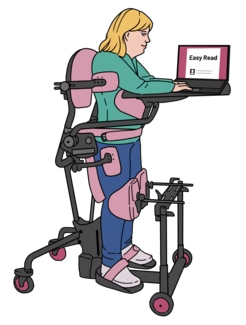
We use images like this because we want the people who find information here to feel good!
Health information that has mean words or pictures does not show respect for you.
Ask for health information that is positive and feels right for you.
Sometimes, information needs to talk about hard or upsetting topics. For example:
Good information gives a warning first. This helps people choose if they are ready to read or watch it.
For example, warnings might say:
Health information should be Inclusive means making sure everyone can take part and feel welcome. It is about including people with different: . Inclusive means it respects different groups and cultures. This is very important when the information has been made for people from a certain group or culture.
For example, information may be made for:
LGBTQIA+ means people who are lesbian, gay, bisexual, transgender, queer or questioning and asexual. The plus (+) means that it could include more people too. LGBTQIA+ is a short way to talk about people with different genders, bodies and relationships.
Health information made for people from a certain group or culture should:
Ask for health information that suits groups and cultures you belong to.

Everyone needs health information that is good and meets their needs, but it can be hard to know what information you can trust.
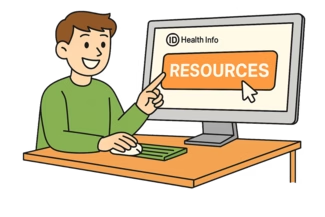
One of the ways you can get health information is from health resources. Health resources can be things like:
Researchers asked people with intellectual disability, family members and health professionals what makes health resources good to use.
Together, they made a list to help people check health resources.
Resource Quality and If something is accessible, it means that everyone can use and understand something. For example: Accessibility makes things fair for people with a disability. Checklist for People with Intellectual Disability and Their Supporters
We have used ideas from the Checklist to write about how you can check if health information is good and right for you. In the links below, you will find examples and practical advice to help build your knowledge and skills.
Often, the best information comes from a person who knows a lot about health and knows things about you too. For example, GPs and other health professionals give good health advice.
The advice we give here should be helpful to most people, but it is not specific to you. Talk to a health professional if:
The National Centre of Excellence in Intellectual Disability Health (the Centre) works to improve health services and the health system so people with intellectual disability can live their best, healthiest lives.
The Centre was funded by the Australian Government. It is part of the National Roadmap for Improving the Health of People with Intellectual Disability.
Tell us about a helpful health resource that you want to share. It could be a podcast, checklist, tool, guide or something else. Resources can help people learn new things and find support.
Your feedback will help us improve Our Health Space.