Ask a question
You can ask questions or search for stories, guides, or tools that help you.

You can ask questions or search for stories, guides, or tools that help you.
The website remembers your choices on this device only. If you use another phone or computer, your settings will not be there.
Because it was made with people with intellectual disability.
Learn more about why we trust it and how to check other information.
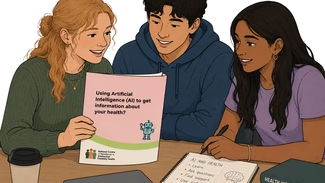
This resource helps people understand how Artificial intelligence or AI is a computer program that seems to think, learn and make choices. AI includes popular chatbots like: AI can sound like a person but it is not a real person. For personal health advice, it is safest to talk to a health professional. can be used to find health information, services, and supports. It includes practical examples, safety tips, and guidance on asking clear questions.
The guide is useful for people with intellectual disability, families, support workers, and carers who want to learn about AI in a safe and If something is accessible, it means that everyone can use and understand something. For example: Accessibility makes things fair for people with a disability. way.
A social story is a story with words and pictures that teaches a new skill or gets you ready to try something new. Social stories can be made just for you. The story can help you worry less and feel more confident.
This resource explains the risks of AI and reminds users to check health information with a trusted health professional.
If you use a screen-reader, you can download this screen reader friendly version
We trust this resource because it is:
We've checked this resource, and you can follow our guide to know if health information is true and right for you.
The National Centre of Excellence in Intellectual Disability Health (the Centre) works to improve health services and the health system so people with intellectual disability can live their best, healthiest lives.
The Centre was funded by the Australian Government. It is part of the National Roadmap for Improving the Health of People with Intellectual Disability.
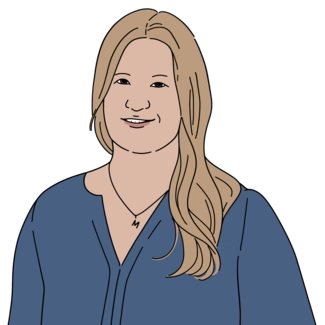
I work for the National Centre of Excellence in Intellectual Disability as a lived experience project worker.
Tell us about a helpful health resource that you want to share. It could be a podcast, checklist, tool, guide or something else. Resources can help people learn new things and find support.
Your feedback will help us improve Our Health Space.