Ask a question
You can ask questions or search for stories, guides, or tools that help you.
You can ask questions or search for stories, guides, or tools that help you.
The website remembers your choices on this device only. If you use another phone or computer, your settings will not be there.
Because it was made with people with intellectual disability.
Learn more about why we trust it and how to check other information.
Easier words with pictures to help explain some ideas.
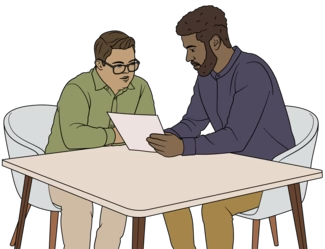
This guide is about supported decision making.
This is when you help someone make an important decision.
You help someone decide what they want to do.
You do not make the decision for them.
The guide explains
This guide is on a website called Neve.
Neve was written by Women With Disabilities Australia.
This guide to Supported decision making is when you make your own choices with help from people you trust. These people help you understand information and think about what might happen. Then you decide what you want to do. is on a website called Neve. Neve was written by Women With Disabilities Australia.
The guide says that when you use supported decision‑making, you help someone decide what they want to do.
You do not make the decision for them.
The guide explains how you can support someone's right to choose by helping them to:
You might not always agree with the choices made by the person you care for or support. But you should support their decision unless it puts people in danger.
You can read Neve's guide to supported decision making in Easy Read or Plain English.
We trust this resource because it is:
We've checked this resource, and you can follow our guide to know if health information is true and right for you.
Women With Disabilities Australia (WWDA) is the national Disabled People’s Organisation (DPO) and National Women’s Alliance (NWA) for women, girls, and Gender is how a person feels about being a boy, a girl, both, or neither. It can be different from the sex they were given at birth.-diverse people with disabilities in Australia.
Tell us about a helpful health resource that you want to share. It could be a podcast, checklist, tool, guide or something else. Resources can help people learn new things and find support.
Your feedback will help us improve Our Health Space.