Ask a question

You can ask questions or search for stories, guides, or tools that help you.

Accessibility settings

The website remembers your choices on this device only. If you use another phone or computer, your settings will not be there.
Add to your home screen

Install this website as an app so you can open it quickly from your home screen or desktop.

Prefer Easy Read

You can choose to see Easy Read content if it is available. It shows pictures and simple words. Move the button to "On" to see Easy Read first.

Presentation

The site will use your system settings to choose a light or dark theme. You can also choose a specific theme for this website.

Glossary

Some words can be clicked to view an explanation. If you find this is distracting, you can choose to hide it.

Choose topics to hide

Turn off content you don't want to see right now.

Communication

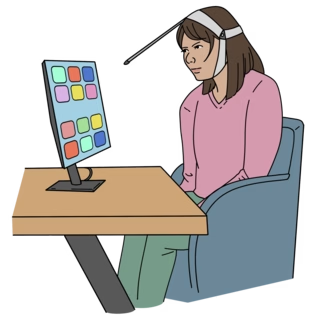
A woman using a head pointer.

When information is easy to understand, people can learn about their health. They can talk about their health. They have the facts they need to make informed choices. 

Good communication puts people at the centre of their own health journey. 

Professionals can learn how to communicate with patients and clients who have intellectual disability.  This could include: 

  • communication methods like key signing and AUSLAN 
  • using tools like pain scale charts  
  • knowing questions you can ask to check understanding. 

It helps to remember that everyone has the right to: 

  • get information they can understand
  • choose how they communicate
  • express their needs and wants.